

Post
A Journey of Service and Memory
Reflections from the Rocky Mountain Honor Flight
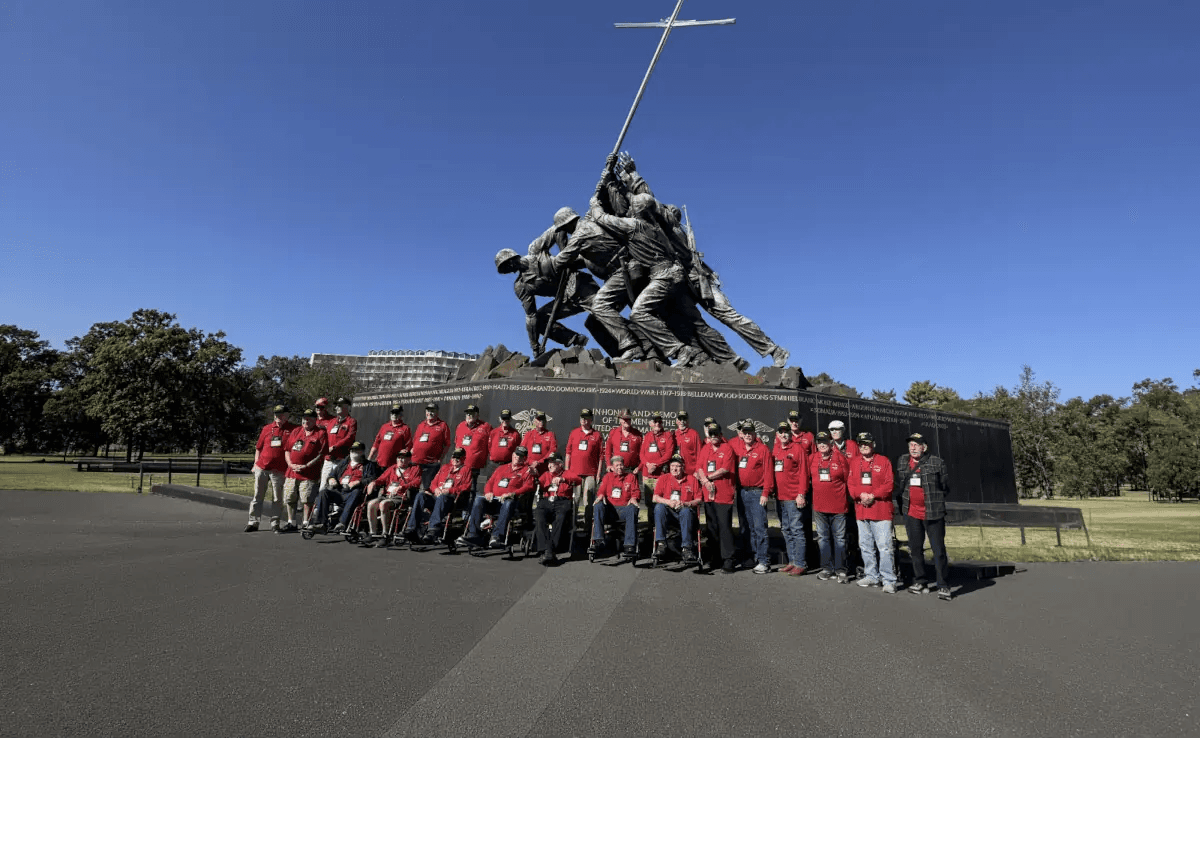
In October, I had the privilege of serving as a physician on the Rocky Mountain Honor Flight to Washington, DC. Our group included thirty veterans and twenty-four guardians who assisted with wheelchairs, memorial visits, and any needs that arose. Among the veterans were twenty-eight who had served in the Vietnam War and two who had served during the Korean conflict.
This trip offered a meaningful opportunity to listen, to witness, and to honor the experiences of the men who served. One of them was John.
Meeting John
When I first met John, a Delta Team reconnaissance specialist and rifleman, I noticed his quick wit and sharp mind. He always had a clever response, yet I sensed a deeper story beneath the humor. Over the next two days, he gradually shared more about his service in Vietnam.
His first day “in country” was January 31, 1968, the start of the Tet Offensive. This offensive, launched by North Vietnam and the Viet Cong, was one of the largest campaigns of the war and involved attacks on more than one hundred cities in South Vietnam. Although the campaign failed militarily, it exposed major weaknesses within South Vietnam’s forces and marked a turning point in American public opinion.
John described the confusion of that day. He was ordered to gather bodies at the American Embassy following an attack there. He wondered if what he saw that day was a sign of what he would face for the rest of his service.
The Events of March 2, 1968
During our flight home, John revealed the memory that had burdened him for fifty-seven years.
His Delta team usually scouted ahead of a platoon to evaluate risks for the day’s mission. On March 2, 1968, however, his small team and the larger platoon departed together. Their orders were to find and destroy an enemy missile battery in the Hoc Mon district.
As seventy-five soldiers crossed a long bridge over a wide creek near a small village, the North Vietnamese Army opened fire. The men instinctively leapt from the bridge to find cover, but the creek banks were booby trapped. Explosive devices hidden in the foliage detonated as the soldiers landed.
John described the devastation. His eardrums burst. Blood vessels in his face and eyes ruptured. He lay covered with dirt, debris, and the remains of his fellow soldiers. Out of seventy-five who had departed the base that morning, only nineteen returned. Ten of them were seriously injured.
He told me about Nicholas Cutinha, a soldier he admired, who managed to return fire with his machine gun and killed fifteen enemy soldiers before he was killed himself. Cutinha was awarded the Medal of Honor posthumously.
A Burden Carried for Decades
John then shared the source of his lifelong regret. That morning, he had felt something was wrong. He did not express this to his lieutenant and had blamed himself ever since for the deaths of the fifty-six men who were lost.
We spoke quietly for a moment. I then said to him, “John, you are forgiven. You did not cause the deaths of those men.”
A single tear fell down his cheek.
Not All Service Looks the Same
Not every Vietnam veteran experienced combat.
Vance served as a Navy storekeeper on a large supply ship responsible for ship-to-ship refueling of aircraft carriers and for delivering food and ammunition to land based military installations. His ship carried two Chinook helicopters that transported supplies throughout the region.
Vance was never shot at, yet his time in Vietnam left lasting effects. He has been treated for coronary artery disease and prostate cancer as a direct result of his exposure to Agent Orange. He described the barrels of herbicides aboard the ship, each marked by a painted stripe that gave rise to the nickname “the rainbow.” Leaking containers and windblown spray exposed him repeatedly to toxic chemicals.
His suffering was different from John’s, but it was suffering all the same.
Lasting Impact
Each veteran on the Honor Flight carried a story. Some stories were shared openly. Others surfaced only after many miles and many years. What united them was the weight of service, the cost of duty, and the hope that their experiences would be remembered with respect.
It was an honor to listen.
How Their Stories Shape Our Commitment to Care
Listening to these veterans reinforced something that I and the team at Hoskinson Health & Wellness Clinic believes deeply. Health is shaped not only by the body but also by the memories, challenges, and unseen wounds a person may carry. Our collaborative approach is grounded in compassion for those experiences. Sharing these stories honors the men who served and reminds us why whole-person care remains at the heart of what we do.
Scott Diering, MD is the Emergency Room Physician at Hoskinson Health & Wellness Clinic. Dr. Diering has over 31 years of experience in emergency medicine and urgent care services.